

Roger L. Daniel Insurance provides the Medicare 101 Educational Series to help Medicare beneficiaries throughout Montana better understand how Medicare coverage works. These guides are designed to explain Medicare in clear, practical terms so individuals can make more confident decisions about their coverage.
Start With the Situation That Fits You

Retiring soon
Review what should happen with Medicare before your active employer coverage ends and retiree coverage begins.
Planning to take retiree coverage
Learn why many retiree plans still require Medicare Part A and Part B.
Already on retiree coverage
Review whether Medicare should be primary and whether Part B timing was handled correctly.
Need drug coverage guidance
Learn how retiree prescription coverage and Medicare Part D may work together.
Retiree Coverage Is Not the Same as Active Employer Coverage
This is the most important rule on the page. Retiree coverage comes from a former employer or union, but it is not treated the same way as group coverage based on current employment. Medicare.gov says retiree insurance can work with Medicare, but it does not replace Medicare and is generally secondary once you have both. CMS also notes that people planning to take retiree coverage from a former employer should enroll in both Part A and Part B because many retiree plans require both to provide coverage.
Do not assume retiree coverage lets you delay Medicare the same way active employer coverage sometimes can.
Do You Still Need Medicare If You Have Retiree Coverage?
Often, yes. CMS guidance says most retiree insurance requires you to have both Part A and Part B to get full coverage. Medicare.gov also says that when you have both Medicare and retiree coverage, Medicare generally pays first and the retiree plan may pay after Medicare processes the claim. That means retiree coverage often works as a supplement to Medicare, not as a replacement for Medicare.
- retiree coverage often expects Medicare to be in place
- Medicare generally pays first
- retiree coverage may pay after Medicare
- delaying Part B can create gaps or claim problems
Who Pays First: Medicare or Retiree Coverage?
Medicare.gov says that if you have both Medicare and retiree coverage from a former employer, Medicare generally pays first. The retiree plan may then pay some of the remaining costs according to its own rules. Medicare’s coordination publication also warns that retiree coverage may not pay medical costs during any period you were eligible for Medicare but did not sign up.
If Medicare should be primary and you do not have Part B in place, the retiree plan may not protect you the way you expect.
When retiree coverage starts
This is one of the most important transition points. While you are still actively working, Medicare timing may depend on employer size and current job-based coverage. But once that active employment ends and retiree coverage begins, the rules change. CMS says people nearing retirement who plan to take retiree coverage should enroll in Part A and Part B as soon as they stop working or lose job-based coverage.
- active employer coverage and retiree coverage are not treated the same way
- the Part B Special Enrollment Period does not wait forever
- retiring is the point to review Medicare timing immediately
- delaying Part B can create penalties or claim denials later
How Retiree Drug Coverage Works With Medicare Part D
Retiree coverage may include prescription drug benefits, but that does not automatically mean Part D can be ignored. The important question is whether the retiree drug coverage is creditable. If it is, you may be able to delay Part D without a late penalty while that coverage remains in place. If it is not, delaying Part D can create future penalties. Medicare’s general coordination guidance says to review the retiree plan documents carefully to see how prescription coverage works with Medicare.
- review whether the retiree drug coverage is creditable
- review when the retiree drug coverage begins and ends
- do not confuse Part D timing with Part B timing
- ask for the retiree plan’s benefit booklet or prescription coverage notice
What to Review Before You Move Into Retiree Coverage
Before you retire or leave employer coverage, review how the retiree plan works with Medicare. Medicare.gov specifically tells people with retiree coverage to contact the employer’s benefits administrator, ask for a copy of the benefit booklet, and review the plan description. CMS’s retirement fact sheet also says this is the time to enroll in Part A and Part B if you are moving into retiree coverage.
- When does active employer coverage end?
- When does retiree coverage begin?
- Do you need both Part A and Part B?
- Is the retiree drug coverage creditable?
- When should Part D be reviewed?
- What does the retiree plan pay after Medicare?
Common Retiree Coverage Medicare Situations
Use this quick guide to identify the issue that most closely matches your situation.
Retiring soon and offered retiree coverage
Review Medicare timing before assuming the retiree plan can take the place of Part B.
Already on retiree coverage but not sure about Part B
Review whether Medicare should be primary and whether the retiree plan expects Part A and Part B to be in place.
Have retiree drug coverage
Review whether the prescription coverage is creditable and whether Part D should be delayed or added.
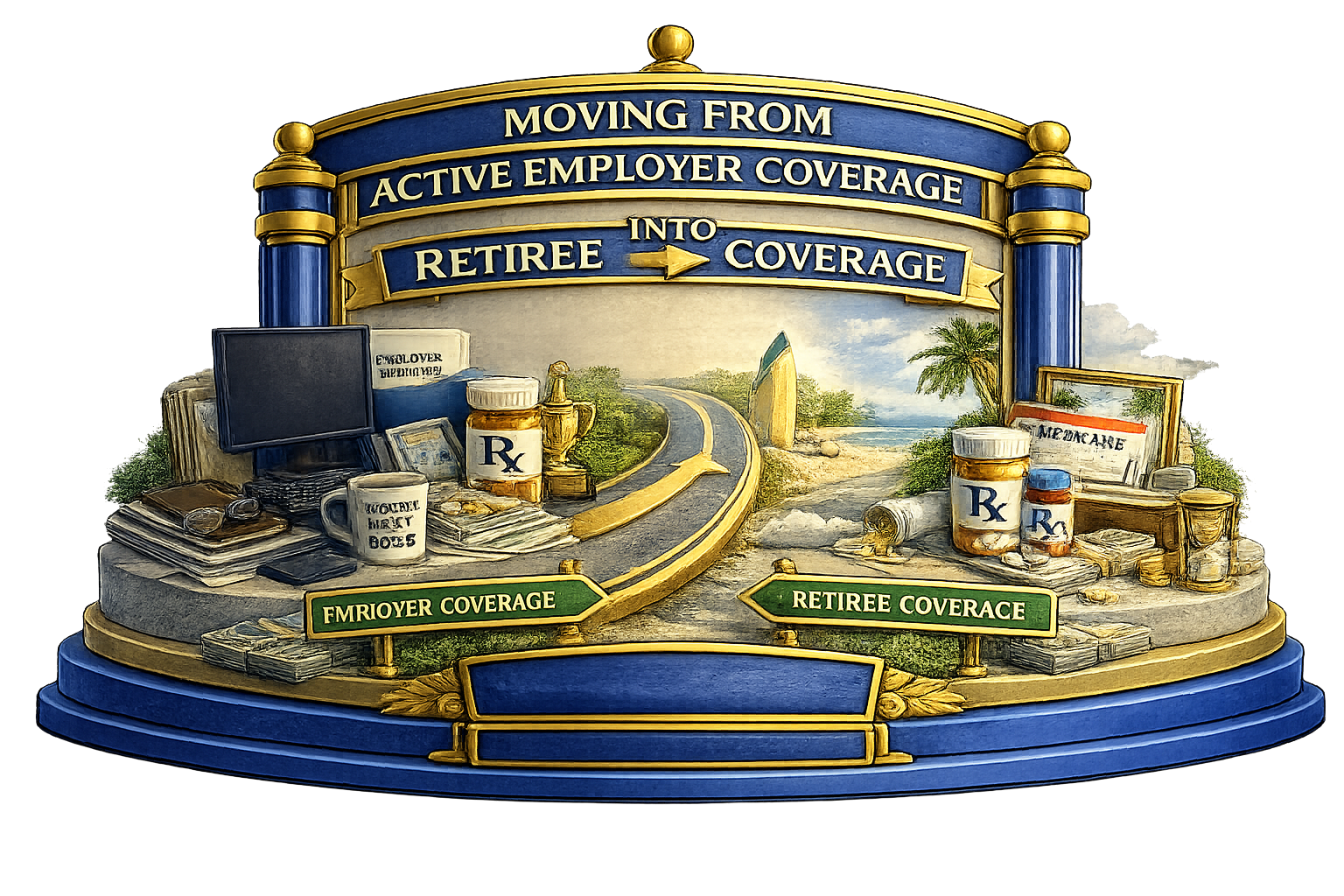
Moving from active employer coverage into retiree coverage
Review the transition carefully because the Medicare rules change once current employment ends.
Common Retiree Coverage Medicare Mistakes
- assuming retiree coverage works like active employer coverage
- delaying Part B because the retiree plan “looks good enough”
- not reviewing whether Medicare pays first
- assuming retiree drug coverage automatically replaces Part D
- waiting too long after retirement to review Medicare timing
- not checking the retiree plan booklet before making decisions
Most retiree coverage mistakes happen when people assume the former employer plan still works like active job-based coverage when Medicare does not treat it that way.
Need Help Reviewing Retiree Coverage and Medicare?
If you are retiring soon, offered retiree coverage, or unsure how Medicare should work with your former employer plan, request a coverage review before making your next move.
Frequently Asked Questions
Important Disclosure
Roger L. Daniel Insurance is a licensed insurance agency and is not affiliated with, endorsed by, or connected with the U.S. government or the federal Medicare program.